Future of Bitcoin Mining: How Will It Work in 2025 and Beyond?
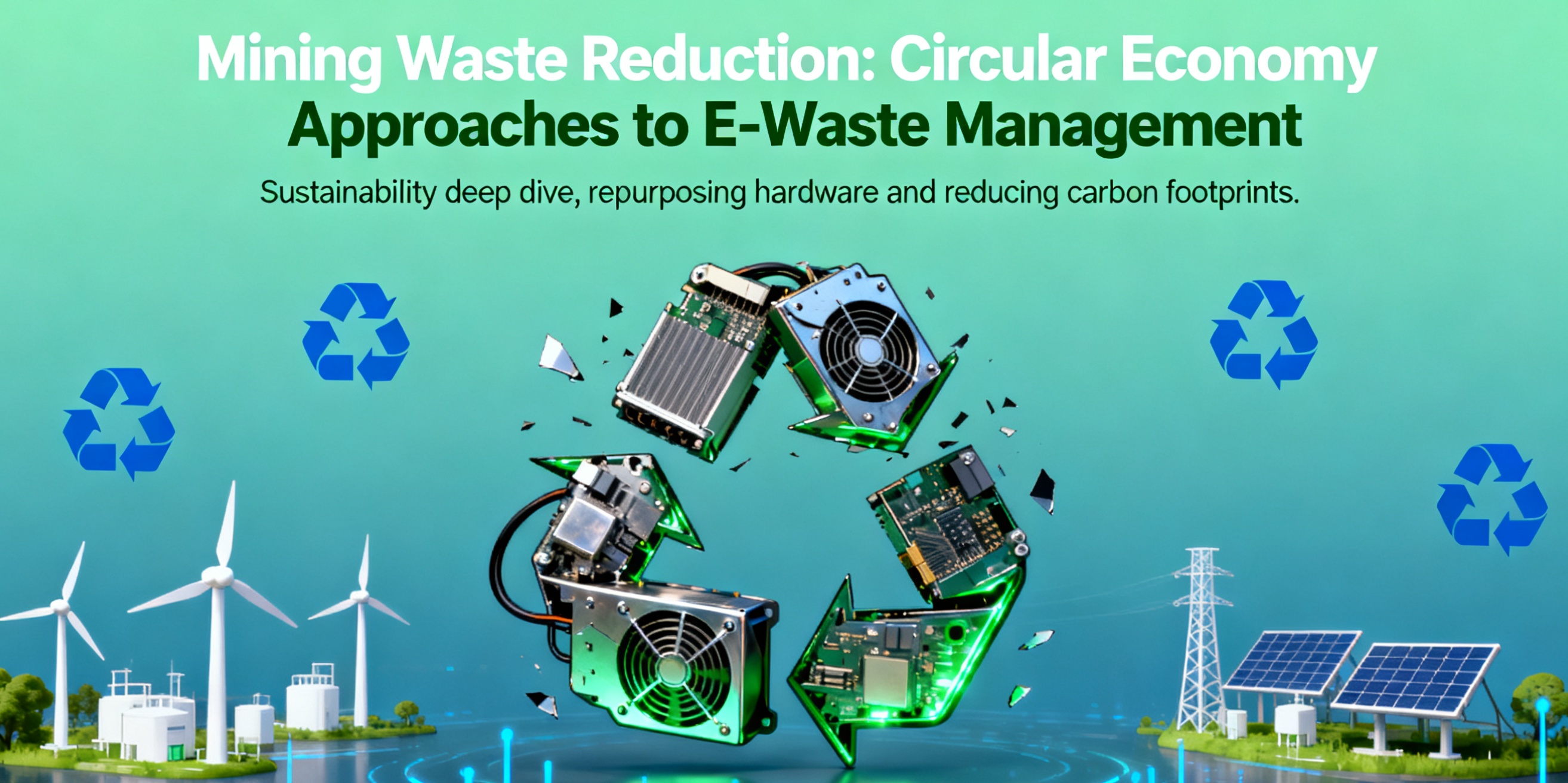
The question of how Bitcoin will be mined in the future is central to the cryptocurrency's sustainability, security, and evolution. While the core principle of Proof-of-Work (PoW) remains the bedrock of Bitcoin's security, the methods, energy sources, and hardware involved are undergoing a profound transformation. The future of Bitcoin mining is being shaped by three dominant trends: the relentless pursuit of renewable energy, technological leaps in efficiency, and increasing integration with broader energy and technology grids.
Energy consumption has long been the most significant critique of Bitcoin mining. The future will see this challenge become its greatest opportunity for innovation. Mining operations are increasingly migrating to areas with abundant, low-cost renewable energy, such as hydroelectric power in Scandinavia and Latin America, geothermal in El Salvador, or flared natural gas in oil fields. This not only reduces the carbon footprint but also turns mining into a flexible, mobile energy buyer that can monetize stranded or intermittent power. In the future, we can expect Bitcoin mining to act as a global battery, absorbing excess renewable energy that would otherwise be wasted, thereby subsidizing the build-out of greener grids and stabilizing energy markets.
On the hardware front, the era of incremental gains in chip efficiency is giving way to radical new designs. While Application-Specific Integrated Circuits (ASICs) will remain dominant, their evolution will focus on extreme efficiency in joules per terahash. More intriguingly, immersion cooling—submerging miners in specialized dielectric fluid—is moving from niche to mainstream. This technology drastically reduces cooling costs, extends hardware lifespan, and allows for higher-density deployments. Looking further ahead, research into optical or quantum-based mining chips, though speculative, hints at a potential paradigm shift in computational efficiency that could redefine the mining hardware landscape entirely.
The regulatory environment will also sculpt the future of mining. Regions with clear, supportive regulations will attract large-scale, institutional mining operations, leading to greater geographical decentralization away from historical hubs. This regulatory clarity will further professionalize the industry, pushing out less efficient operators and integrating mining more deeply with traditional finance and energy sectors. Furthermore, the development of layered protocols on Bitcoin, like the Lightning Network, does not change the base-layer mining but could influence fee markets and miner revenue streams, adding another dimension to their economic calculus.
In conclusion, the future of Bitcoin mining is not about abandoning its core Proof-of-Work mechanism but about refining its execution to unprecedented levels of sophistication and sustainability. It will evolve from a standalone industry into a critical, symbiotic component of the global energy infrastructure. The miners of the future will likely be highly automated, geographically dispersed facilities powered predominantly by renewables, utilizing hyper-efficient hardware, and playing a key role in grid stability. This evolution will strengthen the Bitcoin network's security and resilience, ensuring its continued role as a decentralized digital asset for decades to come.
Dejar un comentario